
Warm, dry basements start with the right floor
Looking for the best flooring for basement warmth and dryness in Wisconsin? Compare LVP, tile, and engineered wood. Get expert picks, then start your project today with J Kruzan in Lake Geneva.
Winter in Wisconsin is beautiful, but it is tough on basements. Concrete slabs get cold, snow melt and humidity push moisture into the space, and freeze-thaw cycles can show every flaw in your flooring. If you want a basement that feels like true living space in Walworth, Kenosha, or Racine counties, start with a floor that stays warm underfoot and resists moisture year round. This guide explains the best flooring for basement comfort in our climate, compares luxury vinyl plank, porcelain or ceramic tile, and engineered wood, and shows how J Kruzan builds long-lasting results with Old World Craftsmanship and modern techniques.
What makes a basement floor warm and dry
Basements are different than above-grade rooms. The slab sits on ground that can be cold and damp, so your flooring choice has to address temperature, moisture, and stability. Here is what matters most.
- Moisture resistance in the material itself. Floors need to handle vapor from the slab and the occasional spill without swelling or mold growth.
- Thermal comfort at the surface. The top layer should not feel icy. Some materials feel warmer on bare feet, and some pair better with radiant heat.
- Dimensional stability. Seasonal humidity swings can cause expansion and contraction. The right construction prevents cupping or gaps.
- Proper subfloor and underlayment. A moisture barrier, air gap, or insulating layer can raise comfort, reduce condensation, and protect your finish floor.
- Durability and maintenance. Basements see a lot of varied use like playrooms, home gyms, and guest suites. Durable finishes simplify cleaning and keep the space looking good.
- Installation details for concrete. Leveling, crack isolation, and vapor testing make or break the outcome in a basement.
Top contenders for the best flooring for basement comfort
Luxury Vinyl Plank or Tile: Warm feel, waterproof core, forgiving installation
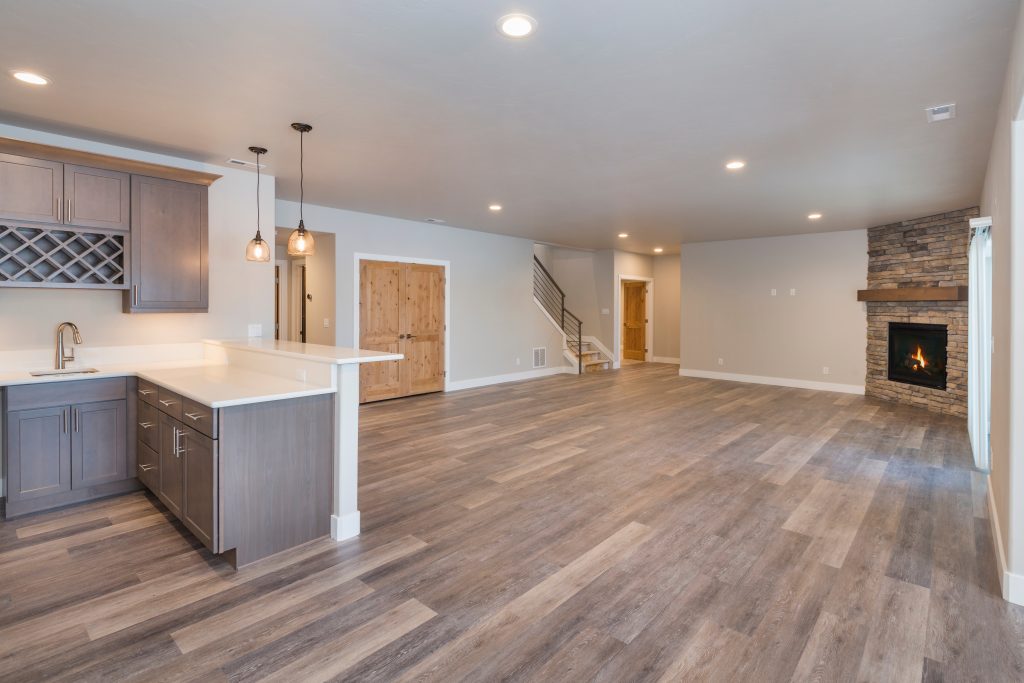
Luxury vinyl plank or tile has become a local favorite for finished basements. LVP uses a rigid core, often SPC or WPC, a high-resolution decorative film, and a durable wear layer. Many products are rated as waterproof, which adds peace of mind in a lower level. LVP tends to feel warmer and softer than tile thanks to its core and attached pad, and it offers excellent scratch and dent resistance for active families.
- Pros: Waterproof construction, realistic wood or stone looks, comfortable underfoot, compatible with most subfloor systems, quick installation, easy to replace single planks if damaged.
- Considerations: Needs a flat, well-prepped slab to avoid telegraphing imperfections, can expand with temperature swings so perimeter gaps are important, extremely low-cost products may have weaker locking systems or thin wear layers.
What to look for with LVP in Wisconsin basements: a thick wear layer of 12 to 20 mil for durability, integrated pad for warmth and sound control, and a product with strong locking edges. Ask about temperature and humidity tolerances. J Kruzan guides clients toward lines we have tested on local basements, including options that perform well over radiant heat and dimpled underlayments.
Porcelain or Ceramic Tile: The driest, most durable surface and the best partner for radiant heat
Porcelain and ceramic tile are the champions of moisture resistance. They do not swell, and the hard surface resists heavy wear, pet messes, and rolling loads. On its own, tile can feel cool to the touch, especially on an uninsulated slab. Pair tile with in-floor radiant heating and it becomes the warmest and most luxurious basement floor. Tile’s thermal conductivity lets radiant systems perform at their best, delivering even heat and remarkable comfort.
- Pros: Unmatched water resistance, long life span, easy to clean, ideal over hydronic or electric radiant heat, endless style choices, excellent for bathrooms, bars, laundry zones, and entry areas.
- Considerations: Cooler without radiant heat, requires careful crack isolation on existing slabs, grout needs sealing unless using epoxy, professional installation is critical to avoid lippage and delamination.
In our climate, J Kruzan often recommends porcelain tile with a crack isolation membrane and a leveling system for flat, long-lasting installations. If you are planning a new basement bath or want a high-end rec room, tile plus radiant heat delivers the warmest result with the driest, most robust surface.
Engineered Wood: Real wood beauty with basement-friendly stability
If you love the look and feel of real wood, engineered hardwood is the smart way to bring it into a basement. Solid hardwood is risky below grade because it expands with humidity, but engineered planks have a stable plywood or multi-layer core that resists movement. Many lines are approved for below-grade installations, either as glue-down, nail-down over sleepers, or floating systems. Engineered wood feels naturally warm and adds value, especially for basements that serve as guest suites or family rooms.
- Pros: Authentic wood appearance and feel, better dimensional stability than solid hardwood, refinishing potential on thicker wear layers, warm underfoot, upscale look.
- Considerations: Not waterproof, needs tight humidity control, careful moisture testing and subfloor prep are essential, choose species and finishes that suit basement traffic.
J Kruzan helps homeowners select engineered products with thicker wear layers, robust cores, and factory finishes that handle daily life. With the right subfloor system to manage moisture and a maintained indoor humidity range, engineered wood can thrive and look beautiful for years.
Choosing the best flooring for basement by use case
Your space and lifestyle should drive the decision. Here are proven picks for common basement plans in Wisconsin.
- Family room or media room: LVP for a warm, quiet, and resilient surface. Engineered wood if you want an elevated look and are committed to controlling humidity.
- Playroom: LVP for softness, easy cleanup, and durability. For extra cushion, add area rugs on top.
- Home gym: LVP or rubber tiles over a moisture-mitigating underlayment. In weight zones, consider rubber for impact and LVP elsewhere for style.
- Guest suite or in-law suite: Engineered wood for comfort and style in sleeping areas, porcelain tile in bath and kitchenette for water protection. The mix delivers warmth where you want it and durability where you need it.
- Bath, laundry, or bar area: Porcelain or ceramic tile. Add radiant heat for maximum comfort. Epoxy or high-quality sealed grout for stain resistance.
- Flood-prone or high-moisture basements: LVP with a dimpled underlayment to allow air flow beneath planks. Tile with proper membranes is another strong option. Avoid materials that can trap water.
- Pet-friendly basements: LVP for scratch resistance and water tolerance. Choose a higher wear layer and textured surface for traction.
- High-end finish: Large-format porcelain tile with radiant heat or wide-plank engineered oak for a luxury feel.
Subfloors, underlayments, and moisture control that make floors last
Assess and prepare the concrete slab
- Moisture testing: Use calcium chloride or in-situ RH tests to confirm vapor emission rates are within your flooring manufacturer’s limits.
- Crack repair: Fill structural cracks and use a crack isolation membrane for tile or an approved underlayment for floating floors.
- Leveling: Self-leveling underlayment corrects humps and dips. Most LVP needs very flat slabs for tight seams.
- Perimeter waterproofing: Inspect for water entry at walls and joints. Address gutters, grading, sump pumps, and drain tiles first.
- Dehumidification plan: Keep relative humidity within recommended ranges. A dedicated basement dehumidifier is often wise in summer.
Choose the right subfloor system
- Dimpled membrane panels: Create an air gap under LVP or engineered wood to reduce contact moisture and improve comfort.
- Foam or cork underlayment: Adds warmth and sound control under floating LVP or engineered wood. Confirm vapor barrier properties.
- Sleepers and rigid foam: Wood sleepers over rigid foam can boost insulation under engineered wood, but require expert planning to manage height and moisture.
- Crack isolation and uncoupling membranes: Essential for tile to avoid cracks telegraphing through from the slab.
- Direct glue-down over moisture barrier: Some engineered woods and LVP are rated for glue-down over specific moisture-mitigating adhesives.
When to add radiant floor heat
Radiant heat is the fastest route to a warm-feeling basement floor. Hydronic systems connect to a boiler or water heater, while electric mats are excellent for bathrooms and small rooms. Tile is the best conductor and gives you the coziest result. LVP and many engineered woods are compatible with radiant heat as long as surface temperatures and adhesives meet the manufacturer guidelines. J Kruzan designs radiant solutions that fit your layout, budget, and flooring choice, then installs them to specification for reliable performance.
Cost ranges for basement flooring in Southeast Wisconsin
Every project is unique, but these ballpark ranges help planning. Pricing depends on product, prep, room shape, stairs, and trim details. J Kruzan provides transparent proposals after a site visit.
- LVP installed: About 5 to 10 dollars per square foot for quality products, including underlayment and basic prep. Premium lines or extensive leveling can increase costs.
- Porcelain or ceramic tile installed: About 12 to 25 dollars per square foot depending on tile size, pattern, membranes, and grout type. Radiant heat adds to budget.
- Engineered wood installed: About 10 to 18 dollars per square foot for reputable brands. Sleepers, specialty underlayments, and stair nosings can affect totals.
- Radiant heat add-on: Electric mats often range from 8 to 15 dollars per square foot installed for smaller zones. Hydronic systems vary widely depending on equipment and area size.
Maintenance and long-term care
- LVP: Sweep or vacuum regularly, damp mop as needed, avoid harsh solvents. Use felt pads under furniture.
- Tile: Sweep and mop with a pH-neutral cleaner. Seal cementitious grout periodically unless using epoxy grout. Check caulk at wet transitions.
- Engineered wood: Keep humidity between about 35 and 55 percent, clean with manufacturer-approved products, use mats at entries, and refinish when wear layer allows.
- All floors: Control humidity with a dehumidifier in summer, run exhaust fans in baths, and address water entry immediately.
Why J Kruzan is a trusted choice for the best flooring for basement projects
J Kruzan Construction & Remodeling, LLC brings Old World Craftsmanship together with modern building science so your basement flooring looks great and lasts. As a local, full-service remodeler based in Lake Geneva, we serve Walworth, Kenosha, and Racine counties with professional planning, clear communication, and careful execution. Whether your basement needs a complete transformation or just a flooring upgrade, our team delivers warm, dry, and beautiful results that fit your home and budget.
- Local expertise: We understand Wisconsin winters, moisture challenges, and what products hold up in our area.
- Proper prep: We test moisture, level slabs, and select underlayments that protect your investment.
- Craftsmanship: Clean lines, tight seams, and crisp details from a team that takes pride in the outcome.
- Transparency: Detailed proposals, realistic schedules, and responsive communication from start to finish.
- One-stop remodeling: Flooring, bathrooms, kitchens, and additions so your whole basement can be planned and built under one roof.
Our basement flooring and remodeling process
- Consultation: We listen to goals and assess your basement’s current condition and moisture profile.
- Design and selections: We recommend the best flooring for basement comfort, help you choose materials, and plan layouts.
- Detailed proposal: Clear scope, timelines, and pricing so you know exactly what to expect.
- Preparation: Moisture tests, slab repairs, leveling, and subfloor installation that set the stage for success.
- Installation: Skilled crews install LVP, tile, engineered wood, and radiant heat systems to manufacturer standards.
- Finishing touches: Trim, transitions, and cleanup for a polished space ready for furniture and family life.
- Walkthrough and warranty: We review the project with you, explain maintenance, and stand behind our work.
Frequently asked questions
What is the best flooring for basement warmth without radiant heat
If radiant heat is not in the plan, LVP typically feels warmer on bare feet than tile due to its core and pad. Engineered wood also feels warm and natural. Adding an insulating or dimpled underlayment and area rugs boosts comfort.
Can I put real hardwood in a basement
Solid hardwood is not recommended below grade. Engineered wood is the better choice thanks to its stable core. Choose products approved for below-grade installations and follow humidity guidelines.
Is tile too cold for Wisconsin basements
Without radiant heat, tile can feel cool. With hydronic or electric radiant heat, tile becomes the warmest and most luxurious surface. If you prefer tile in baths or entrances, radiant heat is a smart upgrade.
What if my basement has had water in the past
Fix the source first with grading, gutters, sump pumps, and drain tile as needed. For finishes, LVP with a moisture-managing underlayment or porcelain tile with membranes are resilient choices. J Kruzan evaluates risk points before recommending materials.
Will a subfloor make my basement too tall
Many underlayments add only a small height increase. Dimpled membranes and thin foam layers usually add under half an inch with the finish floor. Sleepers plus rigid foam add more height but give extra insulation. We design transitions that feel natural to the rest of your home.
How long does installation take
Timelines vary by scope. A straightforward LVP install in a single large room may finish in a couple of days after prep. Tile and engineered wood often take longer due to leveling, membranes, and acclimation. J Kruzan provides a realistic schedule after the site visit.
Do you remodel the entire basement or just replace floors
We do both. J Kruzan Construction handles full basement remodels like bathrooms, wet bars, egress windows, and bedrooms, as well as targeted flooring projects. Our team can coordinate everything under one contract.
Beyond floors: Full-service remodeling by J Kruzan
Turn your basement into a true extension of your home. J Kruzan Construction offers complete remodeling services, including kitchens and bathrooms, room additions, sunrooms and home offices, cabinetry installation, window and door replacements, and exterior and interior repairs. From whole-home remodeling to custom construction, we tailor every project to your goals and budget while committing to detail and quality.
Start your warm, dry basement project today
If you are comparing LVP, tile, and engineered wood and want guidance on the best flooring for basement conditions in Wisconsin, talk with J Kruzan. We will evaluate your slab, recommend materials that fit your use and budget, and install with craftsmanship that stands up to our climate. Contact J Kruzan Construction & Remodeling, LLC at (262) 348-9800 or visit us at 2508 Vista Drive, Lake Geneva, WI. Learn more at jkruzanbuilds.com. We proudly serve Walworth, Kenosha, and Racine counties. Let us help you create a basement that is warm, dry, and ready for all seasons.