
Can I Legally Turn My Attic Into a Bedroom?
Home addition milwaukee: Can you legally turn your attic into a bedroom? Learn code rules, permits, egress, and costs from local pros. Read now to plan your upgrade.
Thinking about turning that underused attic into a cozy new bedroom, an office, or a guest suite? You are not alone. Homeowners across Southeast Wisconsin often ask if it is legal, safe, and smart to finish an attic for living space. The short answer is yes, you can convert an attic to a bedroom in many homes if you meet building codes, pull the right permits, and build it correctly. The longer answer depends on your roof structure, ceiling height, stair access, egress windows, insulation, and local rules. In this guide, the team at J Kruzan Construction & Remodeling shares the essentials you should know before you start planning, plus practical tips from the field. Whether you are exploring a home addition Milwaukee search or you live in Walworth, Kenosha, or Racine counties, this overview will help you plan a safe and code-compliant project.
What Makes an Attic a Legal Bedroom in Wisconsin?
Every community has specific code requirements, and they can vary by city or village. In Wisconsin, many municipalities follow standards based on the International Residential Code alongside the state’s Uniform Dwelling Code. Milwaukee, for example, has its own development center and inspection process. Smaller communities across Walworth, Kenosha, and Racine counties also adopt and enforce local amendments. Always confirm with your local building department and plan to obtain permits before construction. The following items reflect common code expectations for turning an attic into a legal bedroom.
Minimum Ceiling Height and Room Size
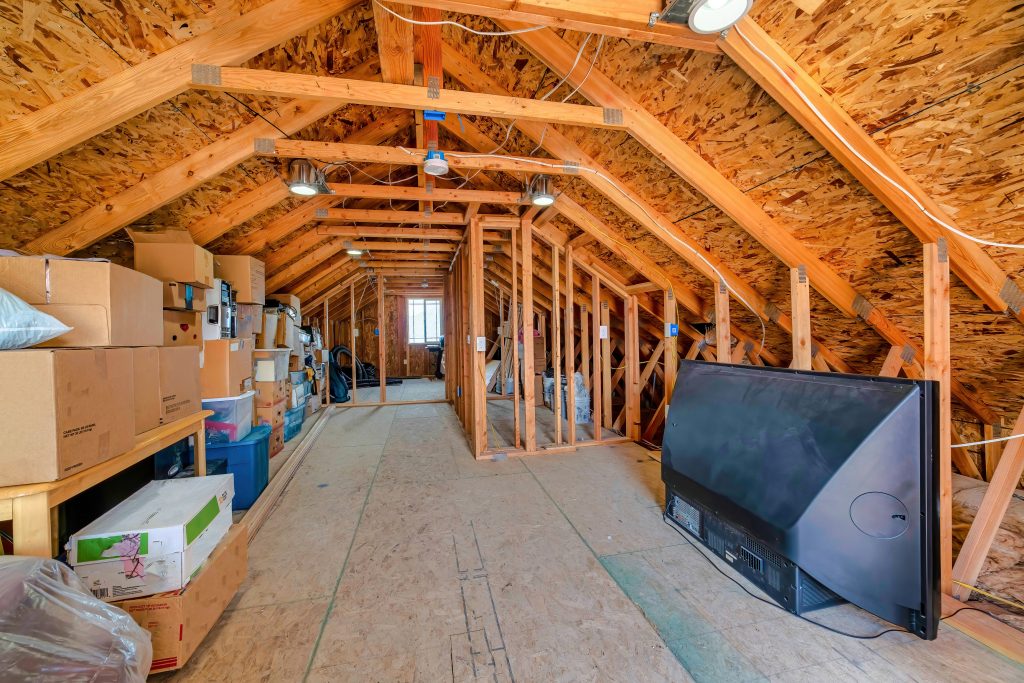
A comfortable and legal attic bedroom needs enough headroom and usable floor area. In many jurisdictions, habitable rooms require a minimum ceiling height of 7 feet over a required percentage of the floor area. Where the roof slopes, areas under about 5 feet in height often do not count toward habitable space. Many codes also set a minimum room size, commonly at least 70 square feet with no dimension less than 7 feet. Since attic ceilings are sloped, early design work should model the space to confirm you have enough clear area at 7 feet and above.
Safe Egress and Natural Light
Bedrooms need two ways out in an emergency. In most attics, that means a code-compliant egress window plus the stair. Typical egress window standards include a minimum net clear opening of 5.7 square feet on upper floors, a minimum clear opening height of 24 inches, a minimum clear opening width of 20 inches, and a maximum sill height of 44 inches above the floor. Some ground floor conditions allow a 5.0 square foot opening. You will also need required levels of natural light and ventilation or mechanical ventilation that meets code. Window style and placement often drive both safety and comfort in an attic.
Code-Compliant Stairs and Access
Pull-down ladders and ships’ ladders generally do not meet code for bedrooms. Most codes call for a permanent stair with a minimum width around 36 inches, maximum riser around 7.75 inches, minimum tread depth around 10 inches, and minimum headroom of 6 feet 8 inches. The stair must also meet handrail and guard requirements. Planning the stair location early in design helps you protect valuable floor area upstairs and minimize disruption below.
Smoke and Carbon Monoxide Alarms
Alarms save lives. Expect to install hardwired, interconnected smoke alarms in the attic bedroom and outside the sleeping area. If your home uses fuel-burning appliances or an attached garage, a carbon monoxide alarm will be required on the floor with the bedroom. Upgrading alarms throughout your home may be required when you add a new sleeping area.
Insulation, Air Sealing, and Ventilation
A comfortable attic bedroom demands careful energy detailing. In Southeast Wisconsin, many energy codes target roof or ceiling insulation values around R-49 and above. Knee walls, sloped rafters, and dormers should be insulated and air sealed to prevent drafts, heat loss, and condensation. You may need vent baffles at the roof eaves to maintain airflow, or you may choose an unvented insulated roof assembly if allowed. Proper air sealing reduces ice dams, protects framing, and lowers energy bills. Balanced ventilation is also key for healthy indoor air.
Structure and Floor Loads
Many attic joists were only designed to carry ceiling drywall, not the loads of a finished bedroom. A structural evaluation is essential. Joists may need to be sistered or replaced, and a new subfloor may be required. Typical live loads for sleeping rooms are higher than for unfinished attics, so the floor system must be upgraded to meet or exceed code. Roof rafters may also need reinforcement if you add dormers or new skylights. J Kruzan often coordinates with structural engineers to confirm that your design is safe and durable.
Electrical, Heating, and Cooling
Your new bedroom needs code-compliant wiring, outlet spacing, lighting, and switches. Arc-fault protection is commonly required for bedroom circuits. For comfort, your HVAC system must heat and cool the space to code standards. You may be able to extend existing ductwork or consider a ductless mini-split if the current system lacks capacity. Proper return air, sealed ducts, and a right-sized unit will make the room comfortable year-round.
Fire Separation and Materials
Certain separations, draft stopping, and fire blocking are often required when you create new living space in the attic. The stair enclosure and any penetrations between floors need special attention. Gypsum board thickness, insulation types, and sealing methods all play a part. Since fire safety rules can vary, your final plans should detail each requirement for your local inspector.
Permit Process in Milwaukee and Nearby Communities
Whether you live in the City of Milwaukee or a village in Walworth, Kenosha, or Racine counties, you will need a permit to convert an attic into a bedroom. This is not a cosmetic project. It affects structure, life safety, insulation, and mechanical systems. The permit process protects you and future buyers by documenting that the work meets code.
- Initial assessment. A licensed contractor like J Kruzan inspects your attic for headroom, framing type, roof style, ventilation paths, and stair options.
- Concept design and budget. You receive a concept plan with preliminary scope, cost range, and a permit strategy tailored to your municipality.
- Construction drawings. Detailed plans are prepared with structural notes, energy details, window sizes, and mechanical layouts.
- Permit application. Your contractor submits the plans, pulls permits, and coordinates any structural engineer stamps if needed.
- Inspections. Expect framing, electrical, insulation, and final inspections. A good contractor will schedule and pass each stage.
- Final approval. You receive documentation that the new bedroom is legal and compliant.
If you are comparing options in your home addition Milwaukee research, remember that a permitted attic conversion supports resale value and avoids headaches with appraisals or insurance.
How Much Does It Cost to Convert an Attic to a Bedroom?
Costs vary with every home, but a realistic range for a finished attic bedroom in Southeast Wisconsin often starts around the mid five figures and can reach into six figures with dormers or a bathroom. Simpler projects where structure is strong, stairs exist, and no dormers are needed may be on the lower end. Adding a full bathroom, multiple dormers, skylights, and high-end finishes increases cost and timeline. J Kruzan provides a transparent budget during design so you can make informed choices.
- Structure and subfloor upgrades. Reinforcing joists, adding beams, or reframing for dormers.
- Stair construction. New code-compliant stairs and any required modifications below.
- Windows and egress. Cutting in new openings, resizing rafters, and installing proper flashing.
- Insulation and air sealing. High-performance assemblies to meet energy code and prevent ice dams.
- HVAC. Extending ductwork or adding a mini-split for heating and cooling.
- Electrical. New circuits, outlets, lighting, and code-required protection.
- Drywall, trim, and finishes. Doors, flooring, paint, and millwork.
- Permits and inspections. Municipal fees and any engineering stamps.
Return on investment depends on location, design quality, and whether you add a bathroom. In many cases, creating another legal bedroom increases your home’s marketability and usable square footage without expanding the footprint.
Attic Conversion vs. Building a New Addition
Both routes add living space, but they solve different problems. An attic conversion works within your existing roof volume, which can be efficient if your home has adequate headroom and a logical stair location. A new addition expands outward or upward and can deliver larger rooms, higher ceilings, and more daylight, at a higher overall cost. If your attic requires extensive dormers, a raised roof, or major structure, the price can approach a new addition. This is why homeowners searching for home addition Milwaukee ideas often consider both options during design.
- Attic conversion pros: Uses existing footprint, can be faster, adds a bedroom without a full foundation, often lower cost than a full addition.
- Attic conversion cons: Limited by roof slope and structure, stair placement can be tricky, egress can be challenging, headroom may restrict layout.
- New addition pros: Flexible design, larger window openings, easier egress and accessibility, can align with main level spaces.
- New addition cons: Higher cost, foundation work, potential zoning and setback limits, longer timeline.
Design Tips for a Comfortable, Code-Compliant Attic Bedroom
- Plan the stair first. A well-placed stair preserves main-floor function and upstairs floor area.
- Mock up headroom. Use tape and cardboard to visualize the 7-foot line under sloped ceilings.
- Choose the right egress window. Balance safety, daylight, and roof structure. Consider a dormer if the wall height is limited.
- Focus on insulation continuity. Connect roof, knee walls, and gable ends with continuous air and thermal barriers.
- Add built-ins along knee walls. Low storage maximizes usable space where the ceiling is short.
- Ventilate wisely. Maintain roof ventilation or design an approved unvented assembly to prevent moisture problems.
- Right-size HVAC. Confirm your current system can handle the added load or plan a dedicated solution.
- Use lighter finishes. Bright paint and good lighting make sloped rooms feel larger.
- Prewire for future use. Add outlets and data lines where you might place a desk or TV later.
Common Mistakes to Avoid
- Skipping permits. Unpermitted work can cause insurance issues and reduce resale value.
- Ignoring structure. Attic joists rarely meet bedroom load requirements without upgrades.
- Under-insulating. Inadequate R-values and poor air sealing lead to hot summers, cold winters, and ice dams.
- Missing egress rules. Windows that are too small or too high off the floor will fail inspection.
- Using a pull-down ladder. Code requires a permanent stair for a legal bedroom.
- Forgetting return air. Supply-only ducts cause comfort and code problems.
- Oversizing skylights. Too many openings weaken framing and can overheat the room.
- Rushing the schedule. Good design, permits, and inspections take time. Build that into your plan.
FAQs About Attic Bedrooms
Do I still need an egress window if I plan to install a sprinkler?
In most one and two family homes, sprinklers do not replace the requirement for an emergency escape and rescue opening in a bedroom. Your inspector can confirm the rules for your municipality.
Can I keep my pull-down ladder if everything else meets code?
No. A legal bedroom needs a permanent, code-compliant stair. Pull-down ladders, alternating tread devices, and ships’ ladders are not acceptable for sleeping rooms.
Do knee wall spaces count toward the minimum room size?
Areas with very low ceiling height usually do not count toward the habitable floor area. Many codes only count ceiling area that is at least about 5 feet high when calculating how much of the room reaches 7 feet. Confirm with your local inspector.
Will my property taxes go up if I add a bedroom?
Probably. Making an attic into legal living space increases your finished square footage, which often raises assessed value. Factor that into your long-term budget.
How long does an attic conversion take?
Timelines vary by scope and permitting. Many projects run 8 to 14 weeks after design, plus time for permits and any engineering. Adding dormers or a bathroom can extend the schedule.
Why Work With J Kruzan for Your Attic Bedroom
J Kruzan Construction & Remodeling, LLC brings Old World Craftsmanship and modern building science to every project. Based in Lake Geneva and serving Walworth, Kenosha, and Racine counties, our team delivers professional design, transparent budgets, and careful project management. We understand local codes and inspectors, and we build attic conversions that are safe, comfortable, and beautiful. From the first assessment to the final inspection, you will know what to expect and when. If you are researching home addition Milwaukee ideas or comparing options across Southeast Wisconsin, our process gives you clear answers before you invest.
Our Attic Conversion and Addition Services
- Attic assessments for headroom, structure, and stair planning
- Design and permit drawings with energy and egress details
- Dormers, skylights, and structural upgrades
- Insulation, air sealing, and ice dam prevention strategies
- HVAC, electrical, and plumbing integration
- Finish carpentry, custom cabinetry, and built-ins
- Whole-home and room additions when an attic is not the best fit
Service Area
J Kruzan proudly serves homeowners in Lake Geneva and across Walworth, Kenosha, and Racine counties. If your search for home addition Milwaukee brought you here, we would be happy to answer questions and share guidance. For projects outside our core area, we can often recommend next steps or discuss feasibility on a case-by-case basis.
Next Steps
- Schedule a consultation. Call J Kruzan at (262) 348-9800 or visit jkruzanbuilds.com to get started.
- Get an attic readiness check. We will evaluate headroom, structure, egress options, insulation paths, and HVAC capacity.
- Align scope and budget. We outline your best solutions, from a simple bedroom to a dormer suite or a full addition.
- Design and permit. Our team prepares plans that meet local code and reflect your style.
- Build with confidence. Enjoy clear communication, clean jobsites, and craftsmanship that lasts.
Turning your attic into a bedroom can be a smart, value-adding upgrade when it is planned and built the right way. The keys are safe egress, a permanent stair, adequate headroom, strong structure, solid insulation, and proper permits. With a trusted local contractor like J Kruzan, you can navigate the details, meet code, and create a comfortable space your family will love. Ready to explore your options? Call J Kruzan Construction & Remodeling at (262) 348-9800, visit us at 2508 Vista Drive, Lake Geneva, WI, or learn more at jkruzanbuilds.com.
Company overview: J Kruzan Construction & Remodeling, LLC is a full-service home remodeling and construction company serving Walworth, Kenosha, and Racine counties. Our specialties include home remodeling, kitchens and bathrooms, basements, whole-home remodeling, home additions, sunrooms, home offices, kitchen and bathroom expansions, cabinetry installation, window and door replacements, exterior and interior repairs, and custom construction. We deliver quality with a focus on professionalism, transparency, and customer satisfaction.